
What is On-Page SEO for Beginners (Complete Guide)
On-page SEO refers to all optimization activities done directly on a webpage to improve its visibility on search engines. It helps search engines understand page content, match it with relevant searches, and deliver a better user experience. For beginners, on-page SEO is the foundation of organic growth and one of the easiest categories of SEO to start with.
What is On-Page SEO and Why It Matters
Search engines such as Google want to serve users the most relevant and helpful information. On-page SEO improves content clarity, keyword relevance, site structure, and user signals. This increases organic traffic, improves engagement, and supports better ranking over time.
Key benefits include:
- Better content relevance
- Higher organic search visibility
- Stronger user engagement
- Improved click-through rates
- Increased ranking stability
How On-Page SEO Works
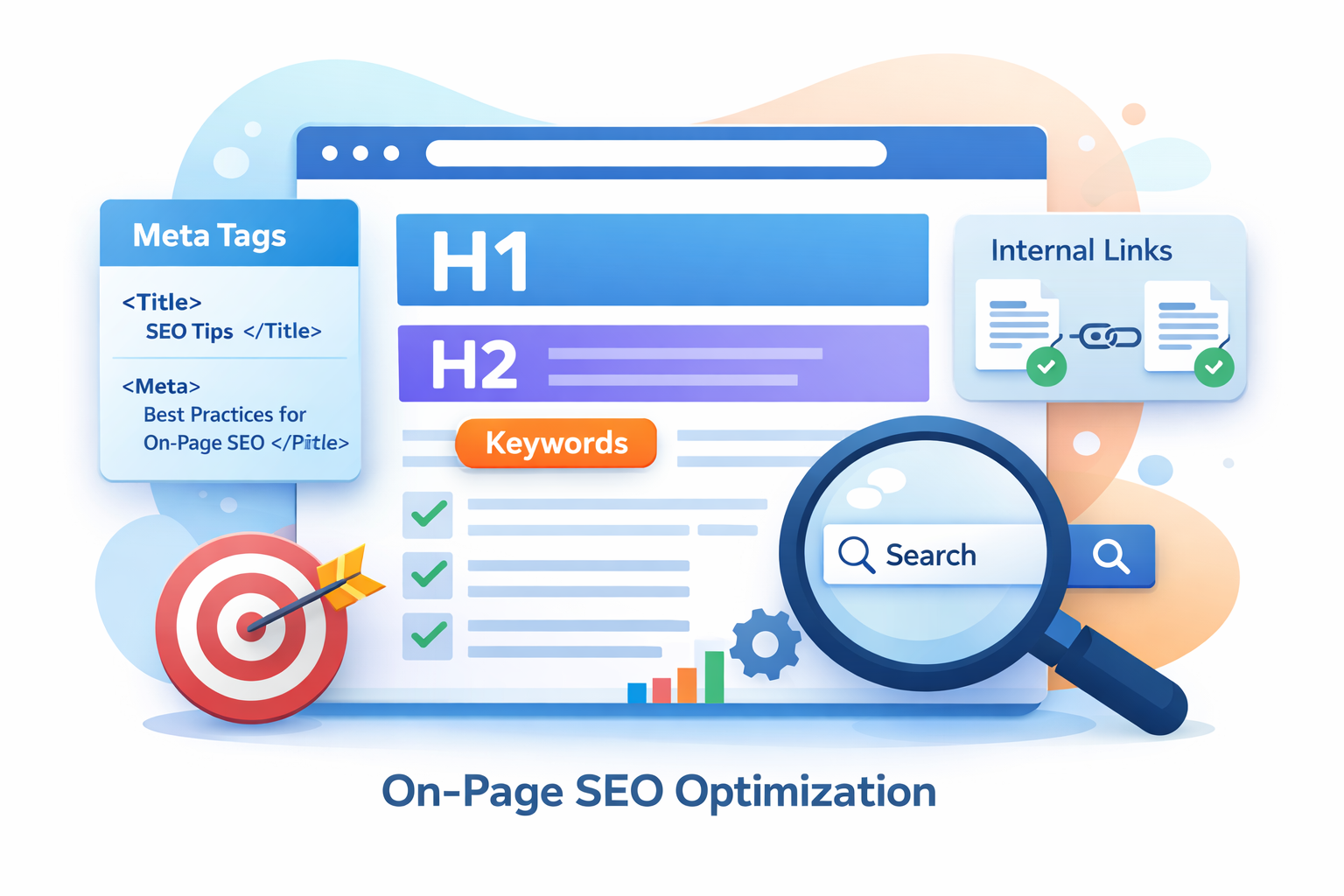
On-page SEO works by optimizing both the content and the HTML elements of a webpage. Search engines analyze keywords, headings, meta tags, internal linking, user intent, and content depth to determine ranking eligibility.
Search engines process pages through four phases:
- Crawling
- Indexing
- Understanding intent
- Ranking
On-Page SEO Techniques for Beginners
Keyword Research
Keyword research helps identify what users are searching for. Beginners should start with informational long-tail keywords like “how to learn SEO for beginners” or “what is on-page SEO for beginners.”
Title and Meta Optimization
Titles and meta descriptions influence both rankings and click-through rates. Titles should include the main keyword naturally and match user intent.
Heading Structure
Using proper heading tags such as H1, H2, and H3 improves content clarity for both users and search engines.
Content Depth
Search engines prefer clear, helpful, and structured content that answers user questions without keyword stuffing.
Image Optimization
Images should include descriptive alt text and be compressed for better speed performance.
Internal Linking
Internal links guide users to related content, distribute link equity, and help search engines understand site structure.
Example link anchor:Learn more about keyword research for beginners
URL Structure
Short, descriptive, and keyword-focused URLs perform better than long and unclear URLs.
Example: /on-page-seo-beginners-guide/
Schema Markup
Schema helps search engines understand page context and can trigger rich results. Beginners can start with Articles or FAQs.
Importance of On-Page SEO in Digital Marketing
On-page SEO connects content strategy with user intent. It improves discoverability, assists conversion-focused pages, and reduces dependency on paid advertisements. For beginners, it also builds a strong foundation for advanced SEO tasks.
Outbound Reference (For Credibility)
Google provides public documentation explaining how search works.
Outbound link to add: https://developers.google.com/search/docs
On-Page SEO Checklist
- Proper H1 heading
- Keyword in title and intro
- Clean URL structure
- Meta description optimized
- Internal linking to relevant content
- Outbound reference to credible sources
- Alt text for images
- Logical heading hierarchy
- No keyword stuffing
- Sufficient content depth
Conclusion
On-page SEO is one of the most beginner-friendly components of SEO. It lays the foundation for organic search visibility, better user experience, and higher credibility. For new websites, mastering on-page SEO is the most efficient way to start growing without relying on paid advertising.If you are new to SEO, start with this beginner guide on what SEO is and how it works.



Leave a Reply